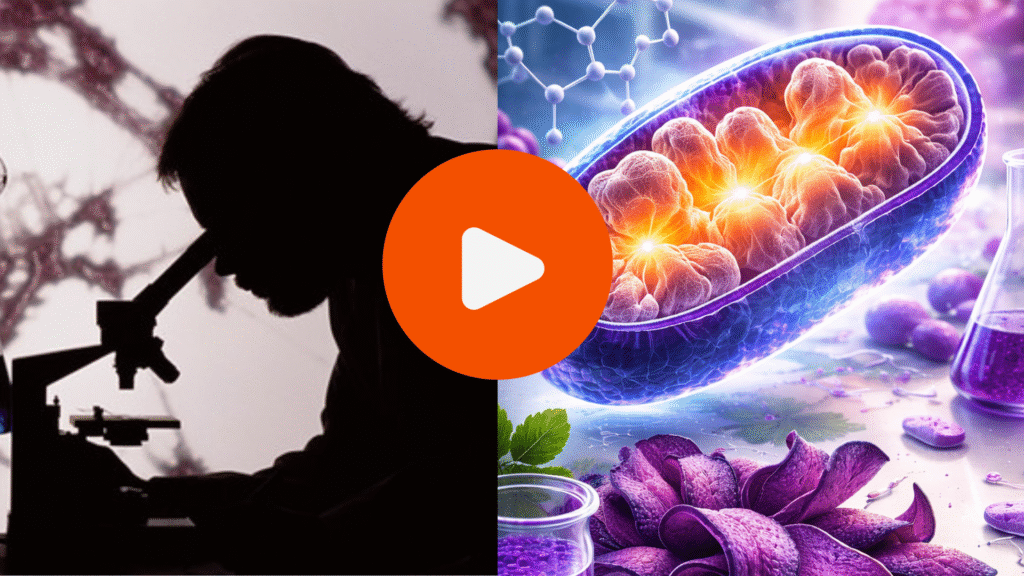

Harvard and Yale explain why some metabolisms burn fat faster

A scientific evaluation has raised new questions about metabolism after observing natural compounds found in purple-colored peels.

“This short video explains the discovery scientists are calling a ‘metabolic switch’.”

🔊 Make sure your sound is turned on. Please, wait up to 10 seconds for the video to load

For many years, issues related to body weight and metabolism were primarily attributed to factors such as poor diet or low levels of physical activity. However, more recent analyses in the fields of physiology and cellular biology have expanded this perspective.

Researchers from a wide range of academic disciplines — including widely recognized institutions such as Harvard and Yale — have indicated that the body’s internal processes may play a more significant role than previously assumed.

A common pattern observed across multiple studies is that a significant portion of people report persistent difficulties, even while maintaining habits considered appropriate. Among the most frequently reported experiences are a sensation of slow metabolism, recurring fatigue throughout the day, difficulty maintaining stable energy levels, and frequent fluctuations in concentration and overall energy.

From a biological standpoint, the energy required for the body’s functions is produced within cells, in structures responsible for converting nutrients into usable energy. When this process operates less efficiently, the body may show signs of reduced energy availability, which can affect daily performance and overall vitality.

These observations do not point to a specific condition, but they highlight the importance of understanding how metabolism functions at the cellular level, rather than viewing it solely through the lens of calories or exercise.

Within this context, researchers have begun examining the role of natural compounds found in certain plant-based foods. In particular, substances present in the peels of deeply purple-colored plants have attracted attention due to their high concentration of antioxidants.

These compounds are currently being studied in academic settings for their potential association with cellular processes related to protection and metabolic balance. It is important to note that these analyses do not represent definitive conclusions, but rather ongoing scientific investigations aimed at better understanding how internal mechanisms influence the way the body produces and uses energy.

Over time, many people come to believe that metabolic challenges are inevitable or exclusively linked to aging. However, researchers emphasize that metabolism is a complex system, shaped by multiple internal and external variables.

Emily Carter
This video explained metabolism in a way I’ve never heard before. It actually made me rethink why I’ve struggled with energy for so long.
Like · 184 Reply · 23
2 hours ago

Michael Thompson
Very interesting explanation about how energy is produced at the cellular level. I didn’t expect something so simple to make so much sense.
Like · 97 Reply · 11
3 hours ago

Laura Jenkins
I’ve watched a lot of videos about metabolism, but this one connected the dots differently. Definitely worth watching till the end.
Like · 256 Reply · 34
5 hours ago

Daniel Rodriguez
What caught my attention was the focus on internal processes instead of just diet and workouts. Makes you look at metabolism from another angle.
Like · 142 Reply · 19
7 hours ago

Sarah Mitchell
I liked how the video stayed educational and didn’t make exaggerated claims. It actually helped me understand why my energy levels fluctuate.
Like · 311 Reply · 41
9 hours ago
This site is not a part of the Youtube website or Youtube Inc. Additionally, This site is NOT endorsed by Youtube in any way. YOUTUBE is a trademark of YOUTUBE, Inc.

Live View Counter
128 people watching now